November 7, 2018 by Christine Bordelon, Clarion Herald
The possibility for mercy is boundless, just as the needs are boundless.
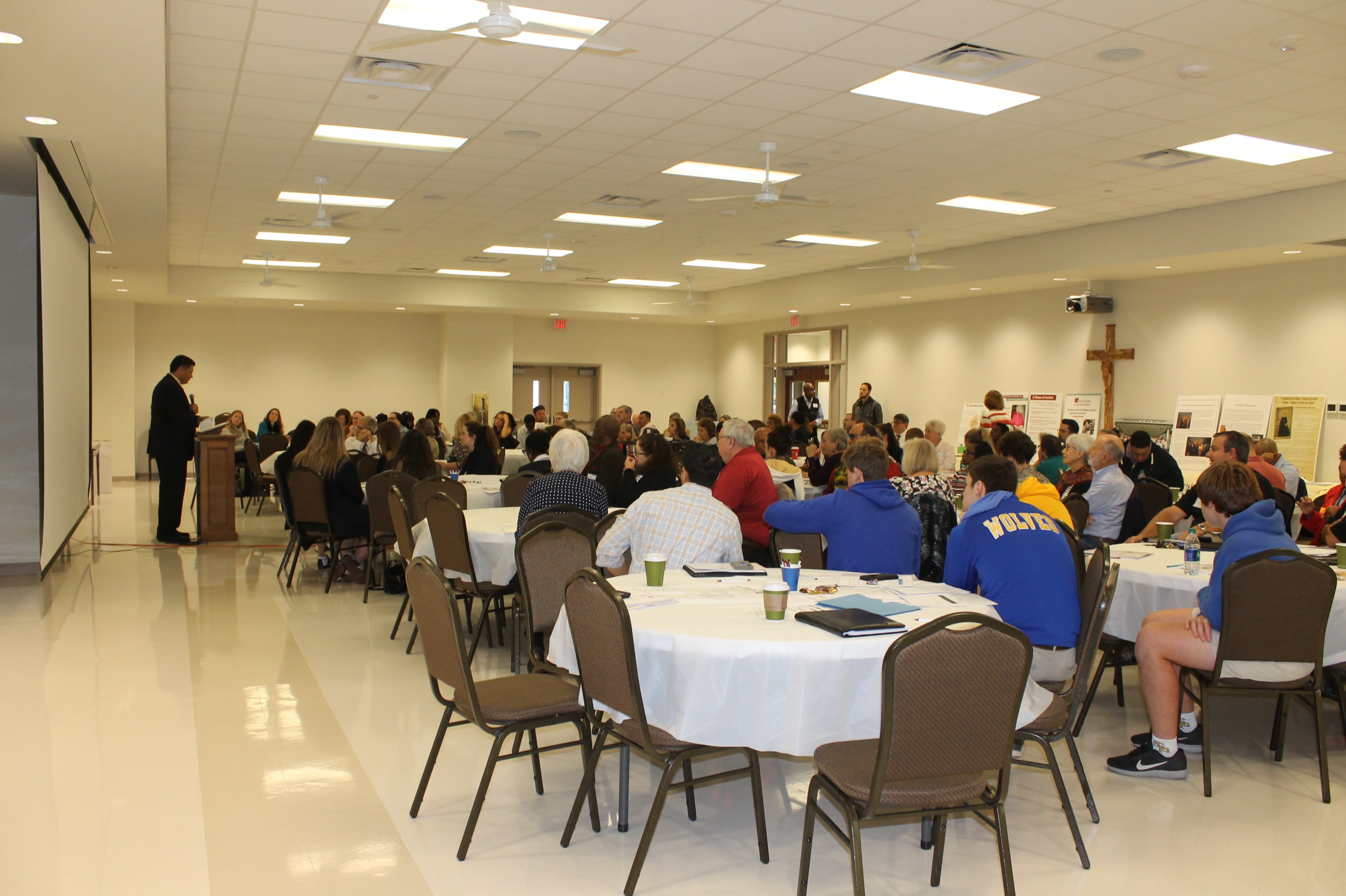
Tom Costanza, division director of Catholic Charities Archdiocese of New Orleans, spoke those words Nov. 2 at the 11th annual Symposium for Systemic Change held at Most Blessed Trinity Parish in Covington.
This year’s theme focused on justice reinvestment.
Before words were spoken on programs that help the formerly incarcerated, several speakers, including Costanza, highlighted the need to be a welcoming community for the formerly incarcerated and how our God is a God of boundless chances. “Who doesn’t need a second or third chance?” he asked.

Deacon Rayfield said we must see Christ in each other, and he hoped the symposium would highlight critical social justice reform, identify the state network of servant leaders and witness for merciful, social justice projects.
Christian leaders, Catholic church parish prison ministry representatives, law enforcement and other agencies that assist the formerly incarcerated gathered at the symposium to reflect on their ministries, discuss best practices to curb recidivism, reduce prison population and the community resources that could reduce crime.

Needed funds for services
Ronnie Moore, program director with Catholic Charities’ Cornerstone Builders ministry – a re-entry program for the formerly incarcerated providing skills and assets for these individuals to be responsible, productive citizens – says the annual symposium highlights critical social justice reform, identifies the statewide network of servant leaders and witnesses for merciful, social justice projects.
He mentioned how the symposium’s work over the years helped pass the Justice Reinvestment Initiative that reduced prison populations through early release of more than 2,000 inmates and reallocated savings from the initiative to bolster programs to aid those being released from prison.

Some of the remaining money went to the Louisiana Commission on Law Enforcement (for victim services and reparation), the Louisiana Department Corrections (to shore up the availability of programs for the formerly incarcerated) and in community grants to nonprofits in 2018. In 2019, money will be used by the Office of Juvenile Justice to help implement earlier reforms.
Catholic Charities Archdiocese of New Orleans received a $264,000 grant for services in St. Tammany, Orleans and Jefferson parishes. Moore said the money will continue funding Cornerstone Builders and its many programs and help establish a one-stop reception center in Orleans Parish for those released from prison to get an instant needs’ assessment, a connection to employment and employment skills, case management, housing and assistance in obtaining a picture ID and Social Security card, birth certificate or anything needed to find permanent employment.
Covington, a Louisiana Re-Entry Advisory Council member, called on the community to gain an understanding of the issues surrounding the formerly incarcerated. The best way to help crime statistics is to provide a continuum of care that prepares the formerly incarcerated for life after prison by assessing their needs and assuring community agencies working in tandem with law enforcement meet those needs.
He lauded his department’s work with Cornerstone Builders, Joseph House in Baton Rouge, St. Vincent de Paul and Ozanam Inn as being critical to the immediate needs of the formerly incarceration.
“It’s all about helping those around us become what God intended them to be.” He said collaboration is critical to keeping people from reoffending.
Breakouts addressed issues

Breakout sessions were held in the morning and included the Welcoming Project, left, discussing working with juvenile justice;
the Catholic Mobilizing Network, below, helping attendees become aware of small steps they can take to abolish the death penalty;


Marianite Sister Marjorie Hebert, president and CEO of Catholic Charities Archdiocese of New Orleans, said all Catholic Charities services, including those dealing with the formerly incarcerated – Cornerstone Builders and its Re-Entry 72 initiative, housing assistance, jobs through workforce development – restore, renew and make a person whole again. They are corporal works of mercy.
“We advocate for the voiceless – those who don’t have a voice – and for a more just society,” she said.
In addition to creating an awareness of current trends and locally, statewide and nationwide, the symposium helps form young people into future decision makers and peacemakers and allows those involved in social justice reform to “draw strength from others doing the same work and reinforces the commitment of others.”